An island brand name does not establish where every ingredient was grown. Ask separately about cultivation, drying, blending and packing. A useful origin statement follows the ingredient through those steps.
Ask four separate origin questions
Where was the mushroom cultivated? Where was it dried or extracted? Where was the blend made? Where was the package filled? A supplier may have a clear answer to each question, and those answers need not name the same place. The problem is not a multi-location supply chain; it is language that collapses several different facts into a single impression without explaining them.
A blend has more than one origin story
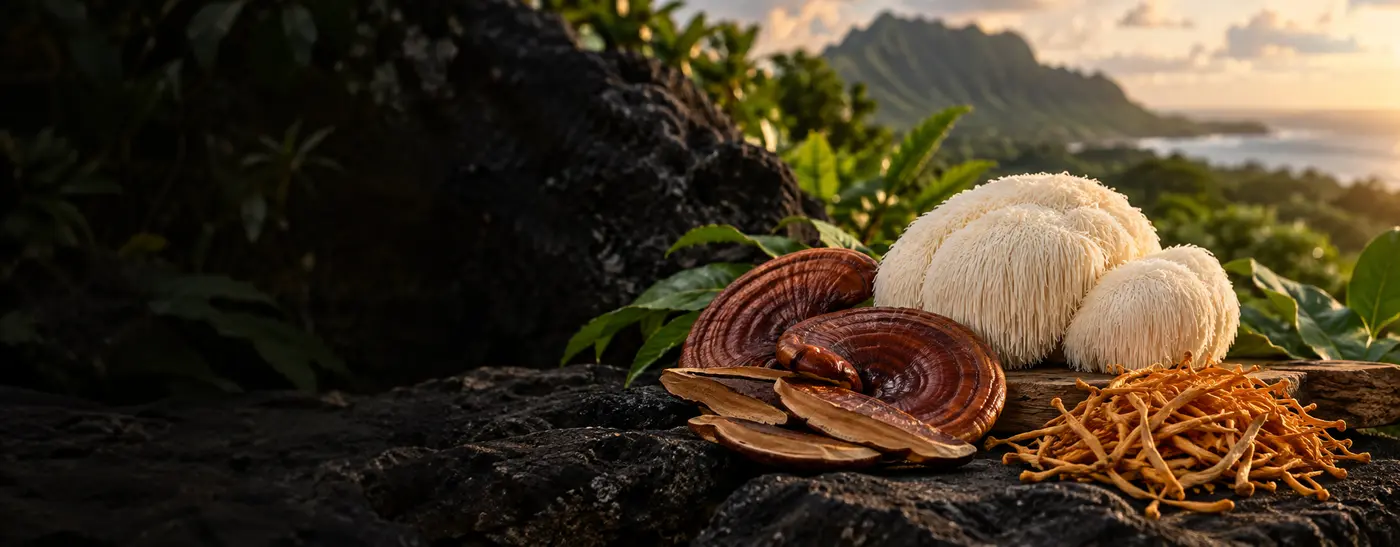
A mushroom-cacao mixture can include mushrooms, cacao, ginger, cinnamon and other ingredients. Even when one ingredient is locally grown, the rest require their own sourcing explanation. Ask which claims apply to the whole product and which apply to a named ingredient. A picture of tropical foliage cannot verify origin, and neither can the mailing address printed on a package.
Cultivation is more than warm weather
A grower must manage the actual growing environment, substrate and handling process. Island humidity alone does not establish production quality or reliable output. University of Hawaiʻi CTAHR has documented oyster-mushroom cultivation education on Oʻahu, illustrating that local mushroom learning exists. That educational work is not a certification of Liona, a partnership with us or evidence that our planned facility is already operating. [Source 1]
Fresh and shelf-stable plans belong apart
Fresh mushrooms require a real harvest and a suitable local handoff. A dried product has a different packaging and shipping plan. Saying a business is based on Oʻahu does not mean a fresh order can be supplied on Maui or Hawaiʻi Island, and it does not make an international shipment routine. Choose the destination guide that matches the actual island or address rather than relying on the word local.
Use a simple supplier interview
Ask for the species, cultivation location, processing steps, ingredient origins and current availability. For a commercial kitchen, add pack size, receiving conditions and who handles a product question after delivery. Record the answers in plain language. A precise small claim is more useful than an expansive story that cannot be checked, especially while a business is still preparing to launch.
Our current position
Liona is preparing for an Oʻahu launch with Kapolei as the planned base. We are not currently selling harvests, operating a public farm shop or naming confirmed supplier relationships. Our illustrations show the creative direction rather than real production. As the operation develops, ingredient-specific sourcing information should replace the planning language. Until then, readers should be able to tell what is an idea, what is educational background and what has actually been verified.
Sources & editorial notes
Sources reviewed September 22, 2026. Our practical comparisons and planning suggestions are editorial guidance. Research references do not endorse Liona, establish benefits for our products, or replace individual medical advice. Recipes and serving illustrations are not independently kitchen-tested.